By Robert Butcher
In every professional association, the ability to participate in leadership decisions is not a right taken lightly; it is a privilege. Voting on leadership, policy direction, and the future of an organization represents both trust and responsibility. It reflects not only a voice, but a commitment to the continued growth and integrity of the profession.
For Certified Legal Video Specialists (CLVSs), the conversation around voting privileges is rooted in that same principle: a desire to contribute meaningfully to the organization that created, trained, and continues to govern the standards of legal videography.
Now more than ever, as the legal industry evolves, we are stronger together.
The foundation: Why the CLVS program exists
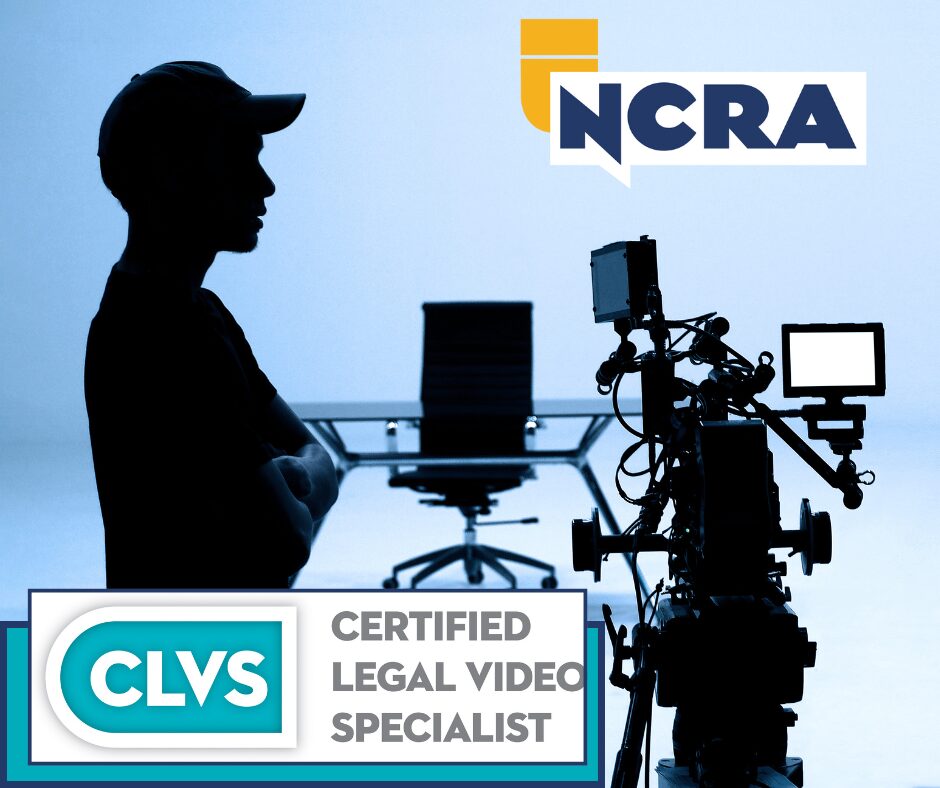
The Certified Legal Video Specialist (CLVS) program was established by the National Court Reporters Association (NCRA) to address a growing need within the legal system: the accurate, professional capture of the audiovisual record to supplement the official stenographic transcript.
For more than 35 years, the CLVS program has served as the national standard for training and certifying legal videographers. It was not created independently or externally; it was developed, implemented, and maintained by NCRA itself.
The purpose was clear:
- Ensure that legal videographers are properly trained and qualified
- Establish uniform standards for capturing video depositions
- Reinforce the integrity of the official record
- Support the work of stenographic court reporters
From its inception, the program required that certified videographers understand:
- Professional video and audio equipment
- Redundancy and reliability in recording systems
- Deposition procedures and legal protocol
- Courtroom and deposition etiquette
- Ethical responsibilities tied to the legal record
This continues to be a significant responsibility.
The official record: A shared responsibility
It is essential to clearly affirm a foundational principle of the legal record:
- The stenographic transcript is the official record.
- The audiovisual recording serves as a supplement to that record.
This distinction is not only widely understood but is also embedded within the standards and practices that govern the profession.
CLVS guidelines and training emphasize that:
- Video depositions are recorded in conjunction with a stenographic reporter.
- The videographer’s role is to accurately and reliably capture the audiovisual component.
- The final video is often synchronized to the stenographic transcript, reinforcing the reporter’s role as the official record keeper.
This relationship is not competitive; it is collaborative by design.
Every day across the country, legal videographers and court reporters work side by side with a shared responsibility:
- The reporter preserves the verbatim written record.
- The videographer preserves the visual and auditory context.
Together they create a more complete and reliable record for the legal process.
A profession built on standards, ethics, and accountability
The CLVS designation is not simply a credential; it is a commitment.
Certified Legal Video Specialists are bound by:
- Established standards of practice
- A formal code of ethics
- Professional expectations enforced by NCRA
Failure to adhere to these standards can result in:
- Complaints filed within the Association
- Disciplinary action
- Revocation of certification
This level of accountability aligns CLVS professionals with other credentialed members of the Association. It reinforces the expectation that those working in the legal record environment must operate with integrity, neutrality, and professionalism.

Ongoing commitment: Membership and continuing education
Maintaining the CLVS certification is not a one-time achievement; it requires ongoing participation.
Certified Legal Video Specialists must:
- Maintain active involvement with the Association
- Earn continuing education units (CEUs) to stay current with evolving standards and technology
- Invest both time and financial resources into maintaining their credentials
This includes:
- Membership-related participation
- Costs associated with continuing education
- Professional development
While specific administrative requirements may evolve over time, the underlying structure is clear: Maintaining a CLVS certification requires ongoing engagement with the organization and its standards. This reinforces a deeper connection between CLVS professionals and NCRA, not just as participants, but as active contributors to the profession’s continued development.
Why voting privileges matter
The request for voting privileges is not about redefining roles or altering the foundation of the profession. It is about recognizing alignment.
Voting privileges would allow CLVS professionals to:
- Participate in selecting leadership
- Contribute to discussions on industry direction
- Engage more fully in the future of the Association
Importantly, this does not:
- Grant eligibility for board leadership positions
- Change the role of the official record
- Alter the structure of the stenographic authority
It simply provides a voice in the broader organizational process.
A balanced perspective: Contribution and representation
As CLVS professionals continue to contribute to the Association through certification maintenance, continuing education, and professional engagement, there is a natural desire to participate in shaping the organization’s direction.
This is not a demand; it reflects shared investment. The conversation is not about entitlement but about alignment between contribution and participation.
The Constitutional and Bylaws amendment process
The proposal to grant voting privileges has followed the established governance process within NCRA.
This includes:
- Securing multi-state support from voting members
- Meeting formal submission requirements
- Entering a structured review and consideration period
Additionally, the proposal acknowledges that:
- Voting participation may come with adjusted membership structures or dues.
- CLVS members would contribute accordingly as participating members.
This reinforces the principle that participation is paired with responsibility.
Stronger together: A shared future
At its core, this conversation is about unity. Legal videographers and court reporters are not separate entities working in isolation. They are professionals operating within the same environment, often in the same room, with a shared goal: To preserve the integrity of the legal record.
In many regions, including here in Colorado, the relationship between videographers and reporters is one of:
- Mutual respect
- Collaboration
- Professional support
Videographers routinely:
- Coordinate with reporters during setup and proceedings
- Ensure their work complements the stenographic record
- Approach each job with a service mindset toward everyone in the room
This culture of collaboration is exactly what the profession needs moving forward.
Conclusion: A thoughtful step forward
Granting voting privileges to Certified Legal Video Specialists is not about redefining the profession; it is about recognizing an existing partnership.
It acknowledges that:
- The CLVS program is an integral part of NCRA’s legacy.
- Certified videographers operate under its standards and ethics.
- Ongoing participation reflects a commitment to the organization.
And ultimately, it reinforces a simple but important idea: When professionals work together under shared standards and mutual respect, the entire industry benefits. Now more than ever, as technology evolves and the legal landscape continues to change, maintaining strong alignment between all contributors to the record is essential.
We are stronger together.

Robert Butcher, CLVS, is the CLVS Council Vice Chair. Butcher is the lead trial consultant at Professional Legal Video, where he specializes in legal video and trial technology. Contact him at robert@professionallegalvideo.com.