By Liane Hatch
In the interest of transparency, allow me to share right from the start that court reporting school took me an exceptionally average amount of time. Less than a decade, but more than a matter of months (as I had hoped). I certainly was not the miraculous prodigy I dreamed (expected) I would be. I stressed constantly about how long I’d be in steno school and what that timeline revealed about me as a person. And I know I’m not alone in that. Almost daily I see steno students gather in online spaces to ask the question “How long is this going to take me?”
On its face, that’s a fair question. We need realistic expectations in mind to help us set goals, budget, plan, prepare, and, if nothing else, to keep our well-meaning friends and family off our backs. On the other hand, learning machine steno is much more art than it is science, and anyone who’s suggesting they have a plan or a program or a school that will 100 percent have you working by X amount of months or Y amount of years is, frankly, full of it. There are simply too many factors to control for, and sadly, I still haven’t found a crystal ball in any of the steno buy/sell/trade groups. There’s just no knowing for sure.
Okay, so maybe there’s no clear answer to how long it’ll take. But SURELY, we can know how to increase our chances of success if we just maximize our practice, right?
I see this type of thinking all over student spaces, and I very much experienced it myself. It’s this idea that if we just choose the right theory, practice the right number of hours each day, memorize the right number of briefs per week, repeat the right number of finger drills, join the right number of practice groups, balance speed and accuracy practice at the right ratios, and ask the right questions on Facebook or Discord, then surely we’ll be out of school in no time, right? RIGHT?
Yeah, so – about that. It’s a nice thought, at least. And it’s rooted in the right place – we value our time and our energy, and we want to practice effectively. What could be wrong with that?
Well, I have good news and bad news. I’ll start with the bad news: There is no such thing as the perfect practice regimen.
But don’t worry! There’s good news, too. Ready? There’s no such thing as the perfect practice regimen.
Effective practice routines lay the foundation for our success in steno school. But as your brain adapts and your fingers gain a fluency you never even knew was possible, “effective practice” may mean something entirely different at 120 wpm than it does at 180 wpm. And what worked for your friend who got through speeds in 16 months might not work for you – or might not work the same way, at least. And the temptation there, I’ve found, is to get stuck in what’s called “analysis paralysis.” If you’re spending an hour a day scrutinizing your practice in hopes that you’ll guarantee certain results, that’s an hour a day you COULD have been actually practicing.
Because as helpful as it is to have a system in place to guide you, theorizing about and discussing what’s going to get us through steno school fastest is likely time that could be better spent just doing it – even imperfectly.
I fully get it. It’s endlessly frustrating that there’s no completely replicable, clinically proven practice method that will get you out of school in 18 months or less. And yet, I’m also of the belief that as long as you’re practicing (mostly) consistently with dedicated care and attention and focus, you’ll probably get there. I couldn’t tell you when, but I know that practicing at all is more important than practicing perfectly.
Will you need to adjust along the way? Undoubtedly yes. But that analysis is probably better saved for every few months or so, not session to session or even week to week. Putting your daily practice under the microscope and expecting it to yield predictable results day in and day out is neither wise nor sustainable.
So in the spirit of embracing “good enough” practice, here are some ideas for less-than-perfect practice. None of these on their own is going to get you to 225, but in my opinion, they’re a much better use of time than arguing the merits of a speed focus vs. an accuracy focus, hunting for some magical combination of finger drills that will unlock all your success, or beating yourself up and reevaluating your whole trajectory just because your 140 LIT was 87 percent this week when you got a 90 percent last week.
Plus, incorporating fun into the practice routine helps keep you from viewing the writer as some kind of foreboding, ominous responsibility.
- Choose 5 – 10 briefs or phrases you want to work on. Turn on your favorite TV show or podcast or YouTube channel and write along ONLY when you hear those words or phrases.
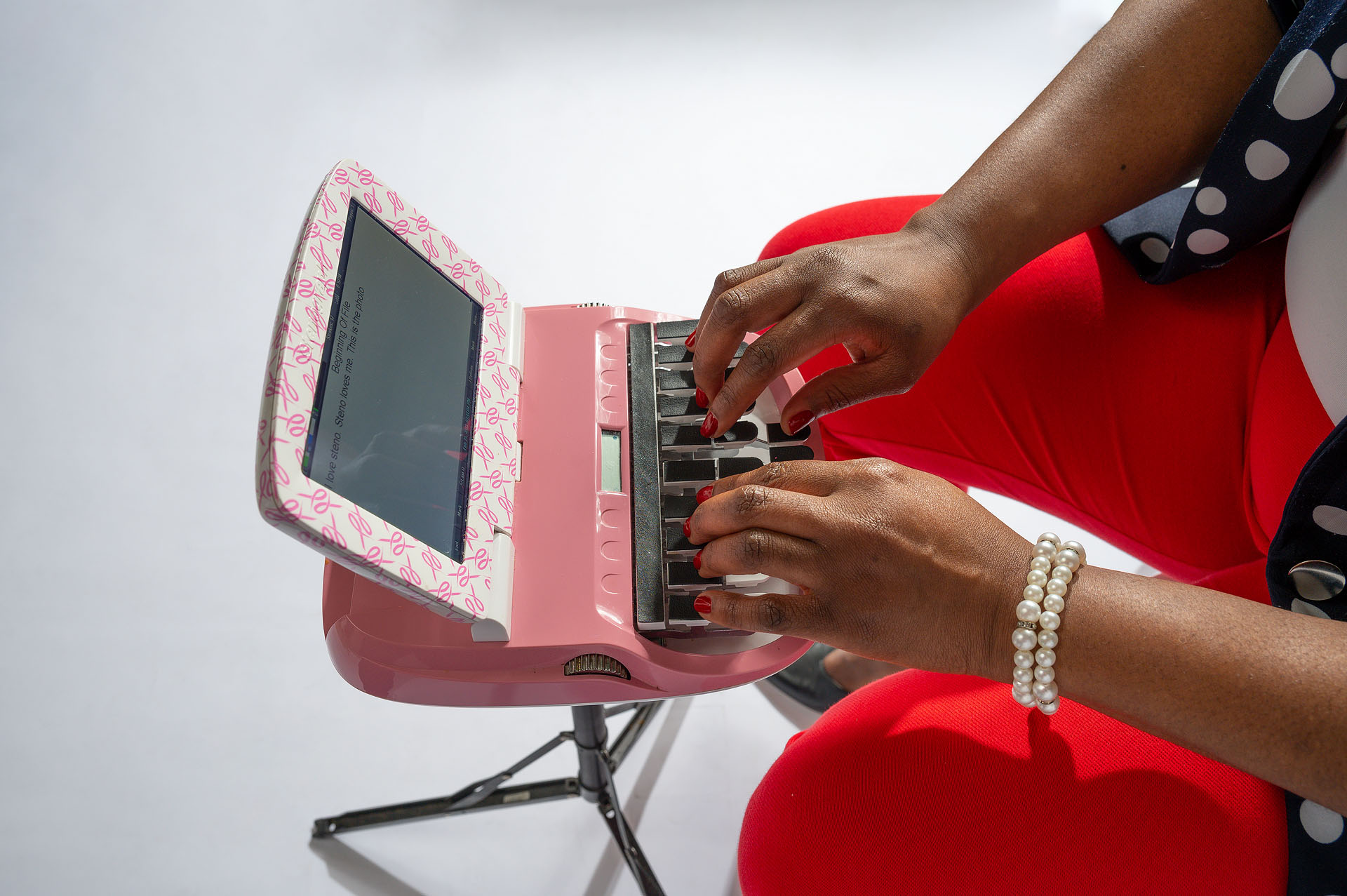
- Put on your favorite music and write along with whatever lyrics you can. It doesn’t have to be at speed, and it doesn’t have to be every lyric there is. As long as your hands are on your writer and you’re having fun, you’re doing great.
- Listen to a podcast with 2-4 hosts, assign each host a speaker bank, and practice nailing your speaker IDs each time the speaker changes. Don’t worry about getting down everything they’re saying – just work on noticing who’s speaking and identifying them each time.
- Hard copy practice to “One Fish, Two Fish, Red Fish, Blue Fish.”
- Journal using your writer.
- Keep your writer nearby while you watch TV, and if you hear a line that you think is interesting or funny or challenging, tinker with how you would write that word/phrase/piece of dialogue.
- Join a practice group. If you’re not part of the “Steno Study Buddies” group on Facebook, that’s a great place to find formal and informal Zoom meetups for students to collaborate, body double, and just get their work in.
- Take a nap. Okay, that’s technically not practice, but I’ve found that once you hit that wall where your practice time is yielding diminishing returns, your brain is fried, and your fingers aren’t working anymore, a 20-minute nap or a walk around the block can really help you finish strong.
In short, this is all to say: You just have to do it. Your success as a steno student comes from showing up and doing the work consistently, not from some magic formula. Try not to overthink it.
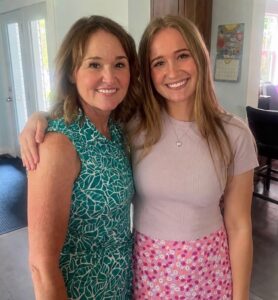
Liane Hatch is a freelance reporter from Whispering Pines, N.C. She can be reached at lianehatch@pm.me