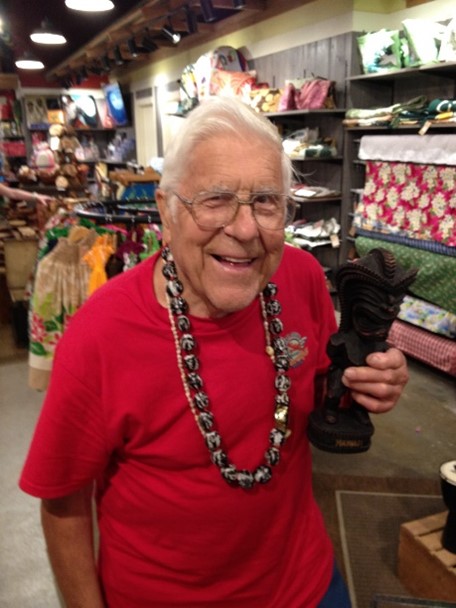
As an NCRF Trustee, Janine Ferren, RMR, CRR, a freelance court reporter from Fishers, Ind., was asked to help with finding four veterans who would be willing to share their stories at a special Veterans History Project (VHP) event being held at the 2026 NCRA Conference & Expo happening July 16-18 in Bellevue, Wash.
Little did she know that her task would lead her to an opportunity to conduct an interview herself via Zoom with 103-year-old Emil Martin, a U.S. Army veteran who lives in Seattle, Wash.
Below, Ferren shares with the JCR Weekly more about her first-time experience capturing the history of an American hero.
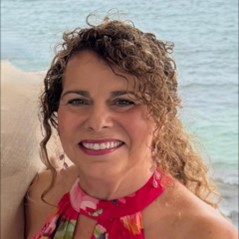
JCR | How did you get involved with this VHP interview?
JF | There is a backstory to this. Twice a year I work at the American Legion national headquarters reporting their national executive committee meetings. During a Foundation Trustee meeting, Jill Parker Landsman, NCRF Director, told us that we would need four veterans to interview for the Veterans History Project taking place at this year’s NCRA Conference & Expo.
I suggested that I could reach out to the two American Legion national representatives from the state of Washington. One of the gentlemen lives in Bellevue (how lucky!) and said he could get us as many veterans as we need for the VHP event at Conference. During the course of his communications with NCRF, he mentioned that he had a World War II veteran who wouldn’t be able to attend the actual event, but that he was available for a remote interview. Since I had so much to do with getting the veterans, Jill offered this interview to me.
JCR | Tell us about the veteran and when and where he served.
JF | Emil Martin was born and raised in Seattle and still lives there. Just before our interview he had turned 103 years young! In his interview he shared many aspects of his military career. He started his service in the Mojave Desert and then joined an anti-aircraft battalion. After just three months of training he was sent to Officer Candidate School. Three months after that he became a second lieutenant. He then joined a newly formed Engineer Combat Battalion, which immediately started training for beach landings, then went to Hawaii where they had jungle training. While in the Engineer Combat Battalion, Emil shared that he spent time on eight different islands. He also served in two campaigns: one in the Palau Islands and one in the Philippines.
Once the war ended, he served in the Army of Occupation in Hokkaido, Japan. When the Combat Engineer Battalion eventually dissolved, Emil joined the 11th Airborne Division, where he became a paratrooper. His military career ended in June 1946 when he was honorably discharged from the Army.
JCR | What did you find the most interesting about this interview?
JF | There were so many interesting parts of this interview that it is hard to select the most interesting one. One thing did stand out to me, and that is Emil’s memory of events from 70 years ago. There are days I forget how old I am, and he remembered small details from his service in the military. He had an incredible memory.
JCR | Did he share why it was important for him to tell his story?
JF | No one had ever asked him to share his story before, and he was happy to share it with everyone who could have the opportunity to read it through the Library of Congress VHP.
JCR | What was your biggest takeaway from this experience?
JF | The Greatest Generation has so much to share with us! Sure, I learned about World War II during my school years, but never from a firsthand point of view. Emil put a human touch on something that only lived on pages of a textbook for me.
JCR | This was your first time interviewing a veteran for the VHP program. Would you do it again?
JF | If I am asked, yes, I absolutely will participate again!
JCR | What would you say to others to encourage them to participate in a VHP interview?
JF | Do it! I had an interest in participating in the VHP for a long time but just never took the plunge. When Jill asked me to conduct the interview with Emil, it was as if opportunity had landed right in my lap. I regret not doing it sooner. It was educational and emotional to hear his story, and it’s an experience that I would have never had but for the VHP. It’s a really easy way for people to open their hearts and minds to part of the world that is so much bigger than us. I had a front-row seat to a veteran’s life in the military during World War II!

If you are going to the 2026 NCRA Conference & Expo in Bellevue, Wash., and are interested in watching a VHP interview take place in person or learning more about the program itself, there are two opportunities to do so.
On Thurs., July 16, NCRF is hosting a special VHP event at the host hotel, the Hyatt Regency Bellevue. Interviews are taking place at 9 a.m., 11 a.m., 1 p.m., and 3 p.m. See the Conference & Expo online app (available in July) for location information.
These oral histories will be video-recorded and transcribed for inclusion in the Veterans History Project (VHP) collection at the U.S. Library of Congress. The VHP program is part of the National Court Reporters Foundation Oral Histories Program. Since the inception of the Veterans History Project, NCRA members have transcribed more than 4,500 oral histories of U.S. military veterans. The VHP and NCRF have a long-term memorandum of understanding to work together.
On Fri., July 17, from 11 a.m. to 12 p.m., you can learn more about the program by attending the session “Voices of Service: Preserving Veterans’ Stories Through Court Reporting” in Grand Ballroom A. The session will be led by Kerry Ward, senior liaison specialist with the Library of Congress Veterans History Project.
For information about how to get involved with the VHP program, contact NCRF Director Jill Parker Landsman at jlandsman@ncra.org.