By Aimée Suhie
A brass plaque was found in the attic of St. Augustine’s Church in Philadelphia that reads: In Honor of the Memory of Thomas Lloyd, Shorthand Reporter of the House of Representatives, First Congress of the U.S., Author, Student, Patriot. This tablet was erected by the National Shorthand Reporter Association.
The “Father of American Shorthand,” Thomas Lloyd, however, got into big trouble in the late 1780s for taking sides during the ratification of the U.S. Constitution. Although he published the most complete and official record of the First Continental Congress, he was widely criticized for not publishing his notes from anti-Federalist speeches and was even accused of taking bribes.
According to the guide to the Thomas Lloyd commonplace book published by the American Philosophical Society, Lloyd was born in 1756 in London and “like many young Catholics of the period, received his education at the Jesuit-run College of St. Omer in Flanders, Belgium. At that time, shorthand was widely used in England to record religious sermons and stage plays as well as speeches in official settings such as Parliament and the Courts and less formal environments such as taverns. The skill was generally self-taught or acquired in schools, especially Jesuit schools. Lloyd learned and practiced what is known as alphabetic shorthand.”
Anti-Federalists accused their political opponents of suppressing the appearance of their arguments by threatening or bribing editors and shorthand writers, including Lloyd.
Pitman shorthand (high-speed, using symbols and shading) was not to be developed until 1837, and Gregg shorthand (cursive, elliptical with no shading) in 1888. Teeline or alphabet-based shorthand was developed in 1968 and is popular in the United Kingdom. [Ed. Note: Earlier shorthand systems, such as the one Samuel Pepys used to record the events of the Great Fire of London in 1666, were often called brachygraphy or tachygraphy and could often be quite idiosyncratic.]
Lloyd’s notes were quite interesting. According to the commonplace book, he did not use vowels or punctuation and few articles and connectives: “In addition to a number of idiosyncratic abbreviations, his shorthand utilized look-alike symbols for many consonants. In order to complete a readable text, he not only had to add vowels and punctuation to his shorthand notes but also had to insert missing words from memory.”
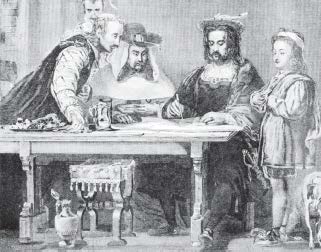
In 1787, Lloyd recorded the debates in the Pennsylvania Assembly. The tools he had to work with included quill pens, large sheets of paper, and his “primitive form of shorthand” according to the First Federal Congress Project. The commonplace book describes Lloyd as “often exhausted during the debates from the many hours required to transcribe and edit his ‘taking’ which he completed at night. He acknowledged that he sometimes dozed during the debate, or that he was drunk. Nevertheless, the fact that he was a freelance reporter unrestrained by deadlines and space limitations allowed him to prepare the text more carefully than other reporters. As a result, his record has been deemed the most complete and accurate of the ones taken. However, only the notes covering the period from April 1789 to March 1790 appeared in print.”
Lloyd had come to the American colonies just before the outbreak of the Revolutionary War and volunteered for the Fifth Independent Company of the Maryland Militia, with whom he fought in the Long Island campaign during 1776, and then the Fourth Company of the Fourth Regiment of Maryland. Wounded at the Battle of Brandywine, Lloyd was discharged in February 1779. Lloyd married Mary Carson in 1780 and moved to Philadelphia where the commonplace book reports that “he generated a reputation as a skilled stenographer and teacher. His continued interest in politics led him to attend the first session of the Federal Congress. His publication of the record for that session earned him a permanent position in all Congressional debates. His publication, the Congressional Register, became widely known as the most accurate and official documentation of debates and was used frequently by individual Congressmen for quotes.”
Lloyd recorded and published the debates of the Pennsylvania Convention to ratify the U.S. Constitution. However, Volume II of a planned two-volume set never appeared, and Volume I only contained the speeches of proponents of ratification. Anti-Federalists accused their political opponents of suppressing the appearance of their arguments by threatening or bribing editors and shorthand writers, including Lloyd. In 1788 Lloyd, whose pro-ratification sentiments were well known, recorded but never published the anti-ratification speeches given at the Maryland Convention. Lloyd was widely criticized for these seemingly partisan actions.
Lloyd went on to work for the United States Treasurer and reported the first Inaugural Address given by George Washington in 1789, which was then published in the Gazette of the United States. He reported on the first session of the First House of Representatives and was appointed official recorder for the second session. While Lloyd continued recording various political debates and congressional sessions, his publication of the Register concluded in 1790. Other claims to fame included being sent to France with letters to Benjamin Franklin, John Jay, John Adams, and Henry Laurens, a delegate to the Second Continental Congress.
Unfortunately, Lloyd’s life did not go well when he returned to London in 1791. Although he published The Commentaries on the Constitution of America, &c., his agent failed to carry out their financial agreement, and Lloyd landed in debtor’s prison. While there, he published a declaration of republican principles that included a condemnation of the prison that held him, was then convicted for libel, and was transferred to Newgate Prison. His repeated appeals for assistance to the American State Department and President Washington were in vain, and he languished in jail until 1796. In 1793, John Carey published with Lloyd’s permission a description of Lloyd’s system of shorthand titled The System of Shorthand Practiced by Thomas Lloyd in Taking Down the Debates of Congress and Now (With His Permission) Published for General Use. Lloyd also kept a diary and published two accounts of his trial during his incarceration at Newgate.
When he was finally released from prison, Lloyd returned to the United States in hopes of once again publishing his recordings. However, he was not given back his position with Congress and moved from one reporting job to another and also worked as a teacher. In 1819 he published his own account of his shorthand, titled Lloyd’s Stenography. However, by 1820 he was nearly blind and depended on his wife, Mary, and their daughters for support. He died seven years later.
JCR Contributing Editor Aimée Suhie, B.A., is a retired court reporter from New Fairfield, Conn. She can be reached at suhieaimee@gmail.com.
The full version of this article appears in the July 2026 JCR magazine and is available online to NCRA members.