By Colin Brehm
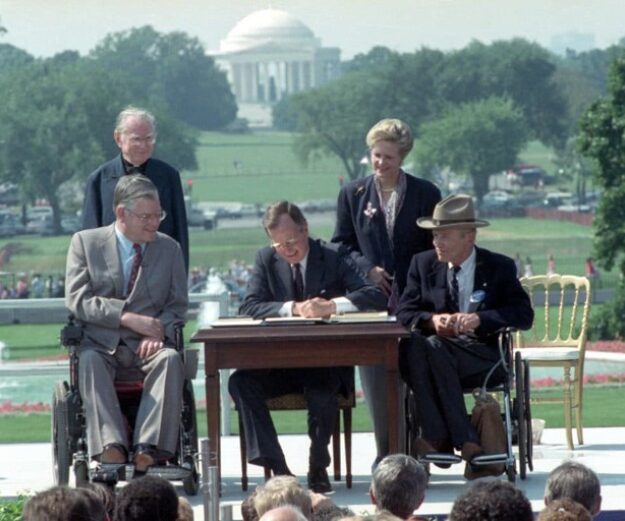
July marks 36 years since President George H.W. Bush signed the Americans with Disabilities Act (ADA) into law, changing lives by breaking down barriers and expanding access for people with disabilities. But the work of creating a truly accessible society continues, and every day professional court reporters and captioners help turn the ADA’s promise into reality.
For millions of deaf and hard-of-hearing Americans as well as individuals with other communication needs, access to accurate, real-time information is essential. Whether providing captions for live broadcasts, public meetings, classrooms, legislative hearings, or other important events, professional captioners make sure people are not left out of conversations that shape their communities, their workplaces, and their daily lives.
Captioning is about much more than converting spoken words into text. It is about ensuring that everyone has the same opportunity to learn, engage, participate, and be heard. While automated technologies continue to evolve, they cannot consistently provide the level of accuracy, context, and reliability that professional captioners deliver, especially when the information is critical.
Accessibility should never be an afterthought. It should be built into the way we communicate from the beginning.
As we recognize the ADA’s anniversary, we also have an opportunity to strengthen its legacy. The Communication Access Real Time (CART) Act would advance the goals of the ADA by requiring accurate, human-generated captioning and Communication Access Realtime Translation (CART) services for official federal communications. This includes taxpayer-funded social media videos and advertisements made possible through expanded franking privileges as well as transcripts of congressional tele-town hall events.
Supporting the CART Act is more than improving access; it renews a national commitment to inclusion and recognizing the professionals who make equal access possible every day.
Colin Brehm is State Government Relations Manager for the National Court Reporters Association, PAC administrator for the NCRA PAC, and a 2025 National Institute for Lobbying & Ethics Top Lobbyist. He can be reached at cbrehm@ncra.org.