There’s still plenty of time to take advantage of our September Super Sale! All month long you can save up to 50 percent on recorded sessions from this summer’s NCRA Conference & Expo in Bellevue, Wash., while earning valuable CEUs.
Whether you missed out on the Conference entirely or just want to catch the sessions you couldn’t see live, our library of more than 30 recorded sessions is open and on sale. Explore topics spanning artificial intelligence, captioning practices, legal videography, and professional development whenever it fits into your workday.
Here is the discount breakdown:
- Buy 2-3 Conference session webinars and get 15 percent off
- Buy 4-5 Conference session webinars and get 20 percent off
- Buy 6 or more Conference session webinars and get 50 percent off
To register and purchase webinars, visit the NCRA Learning Center. Conference webinars must be purchased in one transaction to receive the applicable discount. No coupon or code is needed; just add the webinars to your cart and your savings will be automatically reflected at checkout.
If you previously earned credit for a session at the 2026 NCRA Conference & Expo, you cannot earn it again for the same session’s recording in the Learning Center.
The complete catalog of Conference webinars can be found here, but we’ve got a sneak peek below to give you a taste of what’s available!
Two Pros, One Record: Perfecting Reporter–Videographer Coordination, presented by Myrina Kleinschmidt, RMR, CRR, CRC, and Sarah Kleinschmidt, CLVS
Standard #1 of the NCRA CLVS Standards for Video Depositions states: “The videographer shall work with the reporter to promote, protect and ensure the production of a quality record.” Mother-and-daughter team Myrina Kleinschmidt, RMR, CRR, CRC; and Sarah Kleinschmidt, CLVS, present their session, Two Pros, One Record: Perfecting Reporter–Videographer Coordination, to a room full of both reporters and videographers.
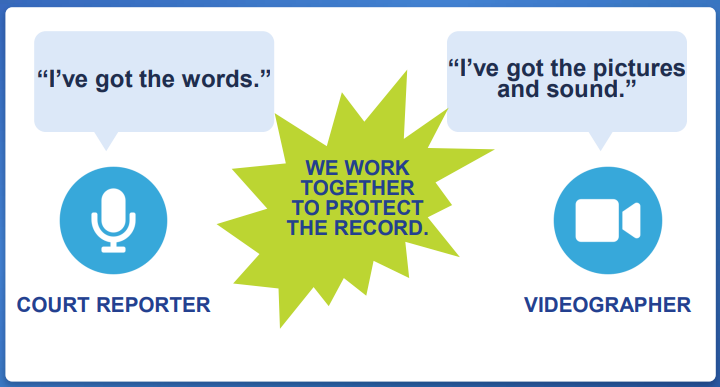
The overarching theme of the session? Communication is key. As they move through their slides and the standards, focusing on those that necessitated teamwork between reporter and videographer, they emphasize that a quality record is protected by that teamwork. Issues of audio feed and video files are not the only points of intersection. Think room set-up, lighting, and stipulation — all part of the discussion before the deposition even starts.
AI Integration – Tips and a Facilitated Discussion for Educators and Reporters, presented by Deborah DuBuc, RPR, CRI, CPE, and Alex M. Lederer, RPR
Deb DuBuc, RPR, CRI, CPE, Program Chair of Realtime Court Reporting at Des Moines Area Community College, and freelance reporter Alex Lederer, RPR, examine the role AI tools can play in preparing students and new reporters to pursue the perfect transcript. The session explores how incorporating AI both within and outside CAT software can sharpen essential writing, editing, and proofreading skills. They dive into practical tips and ethical best practices for bringing modern tech into the classroom, ensuring core transcription standards remain strong while keeping learning relevant and forward-thinking.
By blending educator and industry perspectives, DuBuc and Lederer discuss how schools can empower graduates to enter the workforce with the confidence and skills that make them immediate assets to firms and courts. Attendees will discover AI-powered tools that support hands-on skill development, examine strategies for teaching responsible tech use, and learn how to boost formatting and accuracy without taking shortcuts on foundational training.
How to Find a Great Scopist – Increase Your Profitability and Regain Your Life, presented byRachel Artis, Coralie Ostber, and Heidi Yeager
Hear from three seasoned scopists how court reporters and scopists can stop common frustrations and instead build successful relationships that benefit them both. Rachel Artis, Coralie Ostber, and Heidi Yeager, all affiliated with Scoping International, share how each of their experiences in the profession have led to a roadmap for finding and keeping a great scopist.
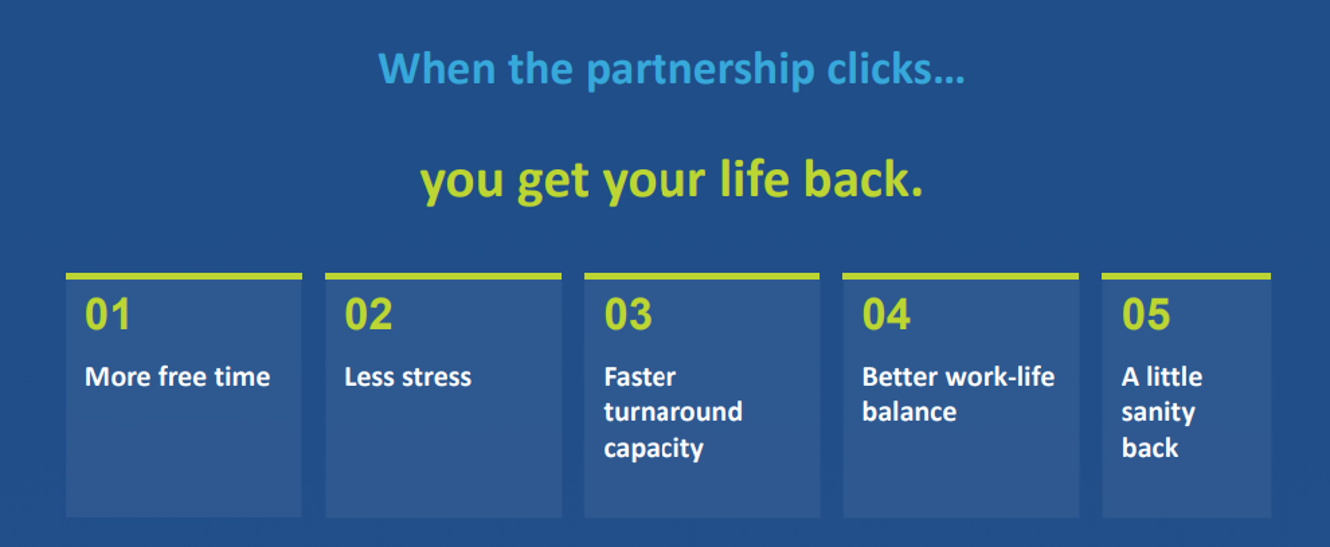
Artis kicks off this informative session by identifying that a lack of alignment is often the biggest source of frustration felt between court reporters and scopists. To turn those frustrations into success means shifting perspectives, taking the time to build relationships, and nurturing trust.
Ostber and Yaeger share tips for helping to build and nurture relationships including court reporters taking the time to communicate with scopists about how they want their transcripts delivered regarding format, style, punctuation, and more by providing a Standard Operating Procedure outlining their expectations. They also emphasize that a good relationship between a court reporter and a scopist offers greater productivity, profitability, and frees up time.
Bottom line: A great scopist edits transcripts the way the court reporter they are working for does, and when the court reporter opens the final transcript it will familiar to them.
Head over to the NCRA Learning Center today to browse the complete library of recorded #NCRABellevue sessions, build your custom bundle, and claim your savings!
The NCRA Learning Center gives 30 days from the date of purchase to complete all required elements unless otherwise noted.





Comments are closed.